
Improved visibility
A clearer view of connected assets, pathways, ownership and exposure.
Cyber security
Syntric helps organisations improve cyber security across operational environments through practical architecture and managed infrastructure services.
Operational context
Operational technology cyber security has to respect uptime, safety, vendor dependencies and the realities of live sites. A control that makes sense in a conventional IT environment may need a different implementation path in OT.
Syntric brings asset visibility, hardening, secure remote access and vulnerability management into the wider digital foundation. Recommendations are grounded in how systems connect, who supports them and what the operation can safely change.
Our approach supports alignment with the NIST Cybersecurity Framework and ACSC Essential Eight where appropriate, alongside applicable obligations under the Security of Critical Infrastructure Act (SOCI Act). Controls are selected for each environment, with OT safety, availability and support constraints guiding implementation.
A clearer view of connected assets, pathways, ownership and exposure.
Security improvements prioritised around operational consequence and feasible change.
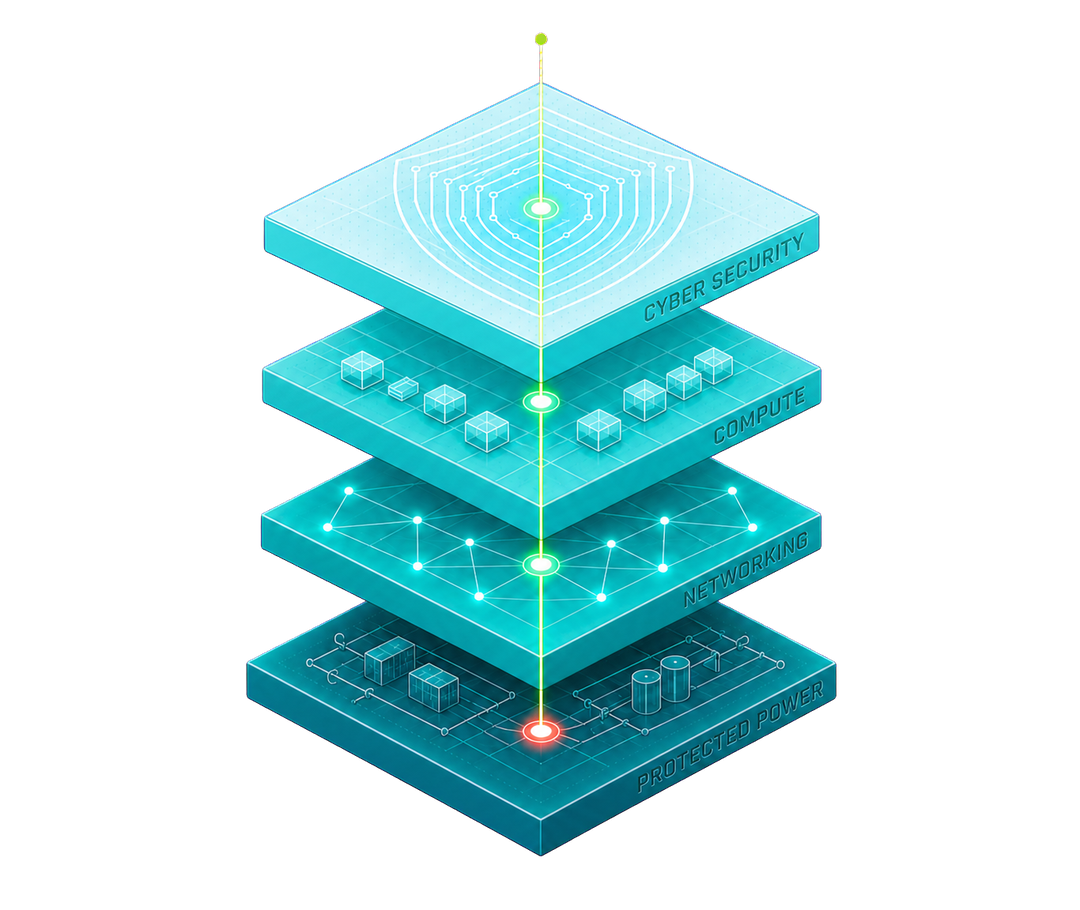
Security considered with the network, compute and access pathways it depends on.
Service scope
The final scope is shaped around the operational environment, existing foundation and outcomes the organisation needs to achieve.
Establish what is connected, how it communicates and where responsibility sits.
Reduce unnecessary exposure and strengthen the pathways around operational systems.
Design controlled access for authorised teams and vendors around operational needs.
Identify, contextualise and track exposures with remediation appropriate to OT.
The managed lifecycle
Map assets, pathways, stakeholders and operational consequence.
Focus effort on meaningful exposure and feasible risk reduction.
Apply architecture, access and hardening improvements deliberately.
Maintain visibility and revisit risk as systems and threats change.
Common questions
OT controls physical processes and often includes long-lived or vendor-managed systems. Availability, safety and support constraints influence how security changes are tested and introduced.
A useful starting point is understanding assets, network pathways, access methods, ownership and operational consequence. That context helps prioritise the next actions.
Yes. Controlled support pathways and an operationally informed view of vulnerabilities are important parts of reducing exposure across the environment.
Start with the foundation
Start with the operational context, the existing foundation and the outcome your environment needs to support.
1300 OP TECH Contact Syntric