
Resilient architecture
A network shaped around site criticality, service dependencies and recovery requirements.
Networking
Syntric designs, delivers and manages OT networks around connected systems, site operations, cyber risk and long-term lifecycle needs.
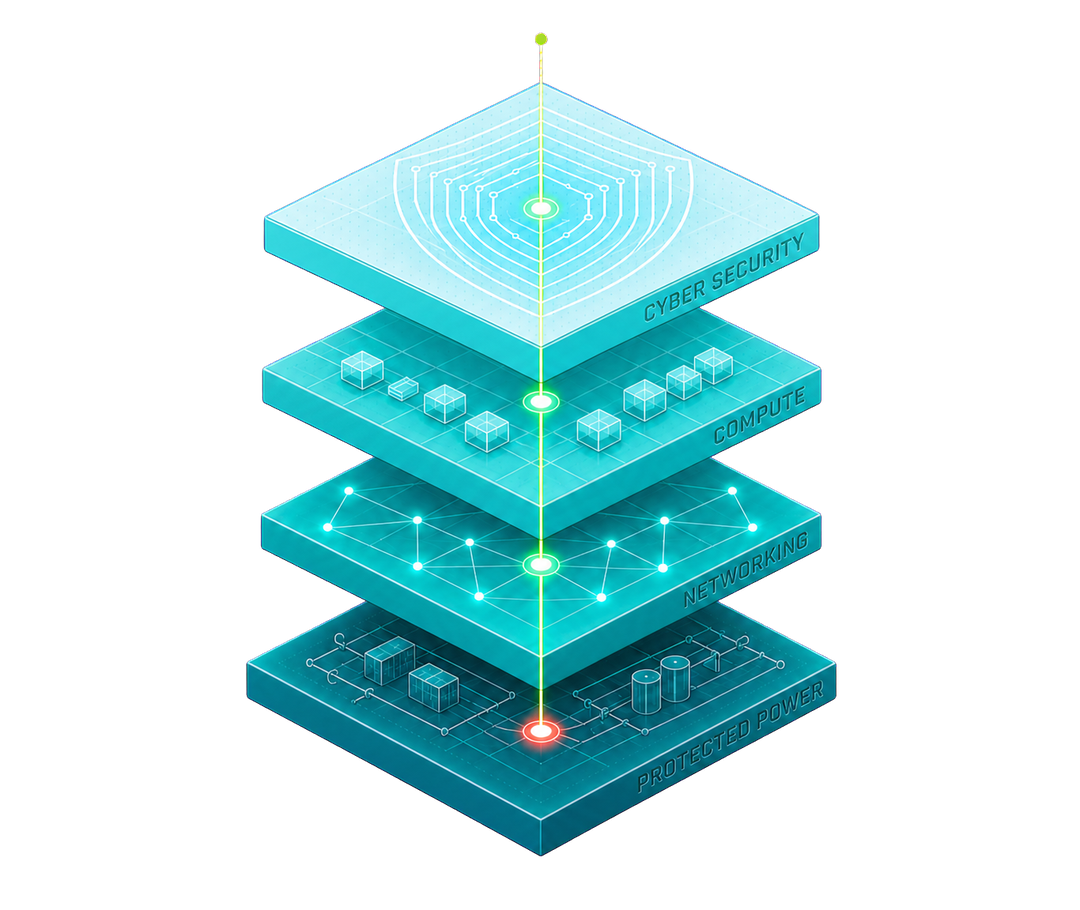
Operational context
Operational technology (OT) depends on connectivity, but the network has to respect more than throughput. Availability, equipment lifecycles, vendor dependencies, physical access and maintenance windows all influence a practical architecture.
Syntric coordinates switching, wireless, segmentation, monitoring and management as one operational foundation. For larger connected environments, that may include an Integrated Communications Network (ICN).
A network shaped around site criticality, service dependencies and recovery requirements.
Segmentation and policy boundaries that support operational and cyber security objectives.
Visibility, documentation and planning that keep the network supportable as the environment changes.
Service scope
The final scope is shaped around the operational environment, existing foundation and outcomes the organisation needs to achieve.
Define network zones, dependencies, pathways and resilience around the OT environment.
Deliver fit-for-purpose connectivity across plant rooms, sites and distributed operations.
Maintain operational visibility and a structured response to faults and change.
Keep topology, configuration intent and renewal planning understandable over time.
The managed lifecycle
Understand the connected systems, current topology and operational constraints.
Coordinate availability, segmentation and scale in a documented design.
Deliver and migrate with care for live systems and site dependencies.
Monitor, maintain and evolve the network as requirements change.
Common questions
OT networking must account for connected physical processes, varied equipment lifecycles, site access, vendor support models and the operational consequence of disruption. Those factors affect design and change management.
Yes. Work can begin with discovery and documentation of the existing environment, followed by an improvement plan that reflects risk, priorities and feasible maintenance windows.
Not necessarily. Convergence should be governed. Appropriate separation, policy and ownership remain important even when systems share a coordinated physical foundation.
Start with the foundation
Start with the operational context, the existing foundation and the outcome your environment needs to support.
1300 OP TECH Contact Syntric